Do Voice Assistants Really Listen to You? Separating Smart Speaker Myths From Fact


Key Takeaways
You're mid-conversation, talking about needing new running shoes, and within hours, ads for sneakers start appearing everywhere. Coincidence? Surveillance? Or something far more mundane?
Smart speakers and voice assistants have become fixtures in tens of millions of homes. By 2024, the number of voice assistants in active use surpassed the global population, an estimated 8.4 billion units deployed worldwide, according to Statista. That's a staggering level of adoption, and with it comes a wave of anxiety, rumors, and outright myths about what these devices actually hear, store, and share.
So let's separate fact from fiction, once and for all.
Myth #1: "My smart speaker is always listening and recording everything I say"
The truth: It's always monitoring, but not always recording.
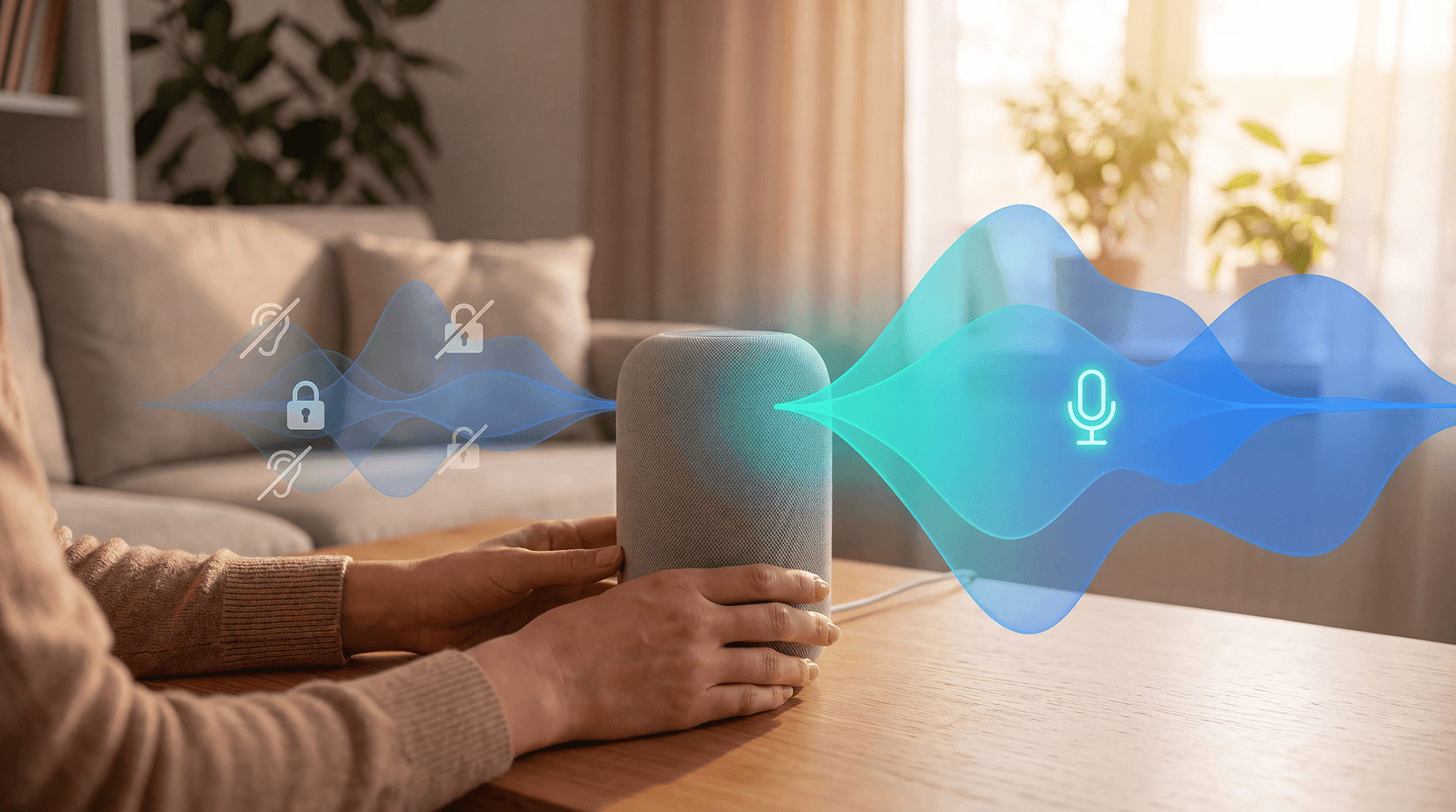
This is the most common misconception, and it's built on a half-truth. Yes, your Amazon Echo, Google Nest, or Apple HomePod Mini keeps its microphone active at all times. It has to, because it's listening for its wake word ("Alexa," "Hey Google," "Hey Siri"). But there's a critical difference between passive monitoring and active recording.
Voice assistants operate in a low-power, passive state the vast majority of the time. The on-device processor is scanning ambient sound for the specific acoustic pattern of its wake word. Only when that pattern is detected does the device wake up, activate the microphone fully, and begin streaming audio to the cloud for processing. Everything before the wake word, your private conversations, background TV, phone calls, is not recorded or transmitted.
Think of it like a guard dog that's always alert but only barks at a specific sound. The dog isn't narrating everything it hears.
Myth #2: "Smart speakers never mishear the wake word, so any recording is intentional"
The truth: False activations happen more than you'd think.
Here's where the privacy concern becomes more legitimate. Researchers at Northeastern University and multiple academic institutions have confirmed that smart speakers can, and do, activate by accident.
A widely cited study published in Computer Speech & Language (Schönherr et al., 2022) documented more than 350 verified phrases that phonetically resemble wake words and can trigger false activations. Common TV dialogue, song lyrics, even certain names spoken at home can be enough to cause a false activation.
A 2020 study highlighted by Consumer Reports found that smart speakers were accidentally activated as many as 19 times per day in test scenarios, and that, once triggered, the devices can stay awake and recording for several seconds before realizing no real command was given.
These accidental recordings are real, and they can contain fragments of private conversations. The major manufacturers claim they delete such snippets quickly, but the fact that they happen at all is a legitimate privacy concern worth understanding.
Myth #3: "Tech companies use voice recordings to target you with ads"
The truth: Probably not the way you think, but the picture isn't entirely clean.
The idea that Amazon and Google are actively listening to your conversations to serve targeted ads is a persistent and emotionally compelling theory. Multiple independent researchers have tested this hypothesis directly and have not found evidence that companies routinely stream private audio for ad targeting. The technical bandwidth, legal risk, and processing costs alone make mass covert audio surveillance implausible.
However, the nuance matters:
- A 2024 academic investigation published on arXiv examined how voice interaction data may indirectly inform user profiles used in ad personalization, even without live audio streaming.
- In 2024, promotional materials reportedly surfaced from a third-party company claiming it could target ads using voice data collected from smart devices. Google subsequently removed the partner from its advertising program.
- Voice interaction data (what commands you give, what you search for, what skills or routines you activate) can contribute to inferred interest profiles that shape the ads you see. This is categorically different from "listening to your conversations," but it's not nothing.
The honest answer: the paranoia about real-time audio eavesdropping for ads is almost certainly overblown. The concern about voice-derived behavioral data informing ad systems is more legitimate and less understood.
Myth #4: "Amazon and Google don't let real humans hear your recordings"
The truth: They do, or at least they used to, and some still do.
In 2019, multiple news outlets reported that Amazon employed contractors to listen to Alexa voice recordings in order to improve the AI's accuracy. Google and Apple faced similar revelations about their review programs. The public backlash was significant, and all three companies subsequently introduced privacy controls allowing users to opt out of human review.
As of 2024-2025, Amazon allows users to:
- Review and delete all voice recordings
- Set recordings to auto-delete after 3 or 18 months
- Opt out of having recordings used to improve Alexa
However, in a notable policy change effective March 28, 2025, Amazon removed the "Do Not Send Voice Recordings" option from Echo devices, meaning that voice interactions are now always sent to Amazon's cloud.
The regulatory consequence: in May 2023, the FTC and DOJ charged Amazon with violating children's privacy law by retaining Alexa voice recordings of children indefinitely, even when parents requested deletion. Amazon agreed to a $25 million settlement and was required to overhaul its deletion practices.
Myth #5: "If I'm not a target, I have nothing to worry about"
The truth: Generic risks can affect anyone.
Even if no company is deliberately spying on you, voice assistant security vulnerabilities create real risks for everyday users:
- Voice spoofing attacks: Researchers have demonstrated that synthetic or cloned voices can fool voice assistant authentication systems, potentially enabling unauthorized purchases, unlocking smart home devices, or accessing sensitive information.
- Ultrasonic injection attacks: Academic researchers have shown that inaudible ultrasonic commands can be embedded in audio played near a smart speaker and cause it to execute actions the user never intended, like opening a door, placing an order, or navigating to a website.
- Network-level exposure: In 2019, a security flaw in Amazon's Alexa allowed hackers to access users' voice histories and personal information. Smart speakers connected to home networks can serve as entry points if network security is weak.
- Data retention risks: A 2025 peer-reviewed study (Acosta et al., Computers & Security) found that only 13% of Amazon Echo and Google Home users and 15% of Apple HomePod users correctly understood that their voice data may be stored indefinitely under default settings.
The risks aren't science fiction, but they're also not the all-seeing surveillance state that social media rumors describe.
What's actually true: a balanced summary
How to actually protect your privacy
You don't have to choose between a smart home and privacy. A few practical steps go a long way:
- Mute the microphone when not in use. All major smart speakers have a physical mute button that cuts power to the mic. This is the most reliable protection.
- Review and delete your voice history. Amazon, Google, and Apple all allow this through their apps and settings.
- Set auto-deletion. Configure recordings to automatically delete after 3 months (the shortest option Amazon currently offers).
- Opt out of human review. Check your privacy settings; most platforms offer this option.
- Keep your home network secure. Use a strong Wi-Fi password, enable WPA3 encryption if your router supports it, and consider placing smart speakers on a separate IoT network segment.
- Audit third-party skills and apps. Third-party Alexa skills or Google Actions may have different privacy policies than the core assistant. Disable any you don't use.
- Understand the indicator lights. Learn what your device's lights mean. A lit indicator when you haven't spoken is a signal worth investigating.
Get started with a free scan to see where else you might be exposed online.
Conclusion
Smart speakers are not the omniscient surveillance devices that viral memes make them out to be, but they're not entirely innocent either. The truth lives in the nuance: they passively monitor always, they occasionally record by accident, they've been used by human reviewers, and real security vulnerabilities do exist.
What they almost certainly are not doing is streaming a live feed of your dinner conversations to an ad algorithm.
The best posture is informed use: understand the actual risks, use the privacy controls that exist, and make deliberate choices about where you place these devices in your home. In a world of 8.4 billion voice assistants, that kind of digital literacy matters more than ever.
Get a free security scan with Guardio today and stay protected from phishing and identity theft.
FAQs
Are voice assistants always listening?
Voice assistants are always passively monitoring for their specific wake word ("Alexa," "Hey Google," "Hey Siri"), but they only begin recording and transmitting audio after that word is detected. Everything said before the wake word is not recorded or sent to the cloud. The microphone is always on, but true recording is triggered, not continuous.
Can smart speakers accidentally record private conversations?
Yes. Smart speakers can be falsely triggered by words or phrases that phonetically resemble their wake word. A Consumer Reports-cited study found devices activating accidentally up to 19 times per day. Once triggered, they can record several seconds of audio before recognizing no command was given, which means fragments of private conversations can occasionally be captured.
Do Amazon and Google use voice recordings to target ads?
There's no verified evidence that Amazon or Google stream live audio from smart speakers to target ads in real time. However, voice interaction data, such as what you search for or what skills you use, may contribute to inferred behavioral profiles that influence the ads you see. The concern is more about derived data than direct audio surveillance.
Can I stop my smart speaker from storing recordings?
You can limit but not fully prevent data storage on most devices. Amazon and Google let you review and delete your voice history manually, or set recordings to auto-delete after 3 months. Note that as of March 2025, Amazon removed the option to prevent voice recordings from being sent to the cloud entirely, so some data transmission is now mandatory on Echo devices.
Have Amazon and Google employees actually listened to voice recordings?
Yes. In 2019, reports confirmed that Amazon and Google employed contractors to listen to voice assistant recordings to improve AI accuracy. All three major platforms, Amazon, Google, and Apple, subsequently added opt-out controls for human review. The practice is still permitted under most platforms' policies unless users explicitly opt out in their privacy settings.
What are the real security risks of smart speakers?
Real risks include voice spoofing (cloned voices tricking authentication), ultrasonic injection attacks (inaudible commands triggering actions), and network vulnerabilities (smart speakers acting as entry points to a home network). A 2019 flaw in Amazon's Alexa allowed hackers to access users' voice histories. These risks are real but manageable with basic security steps.
 How-To & Safety Tips
How to Spot a Fake Online Store Before You Pay