How to Verify a Brand Website Before You Sign In or Pay



Key Takeaways
- The URL is the only truth: Logos, layouts, and even SSL certificates can be faked. The domain cannot.
- Arrive through paths you control: Type the URL, use your bookmark, or open the official app. Never trust links from messages.
- Lookalikes only need 10 seconds: They are designed to look right just long enough for you to enter credentials.
- Password managers are a safety check: If autofill does not work, the domain may be wrong.
- Urgency is the red flag: Legitimate sites do not need you to act in the next 60 seconds.
If you cannot confirm you are on the brand's real domain, do not sign in or pay. Open the official site or app yourself, then navigate to login or checkout from the homepage.
{{component-cta-custom}}
Why Lookalike Sites Work (Even on Smart People)
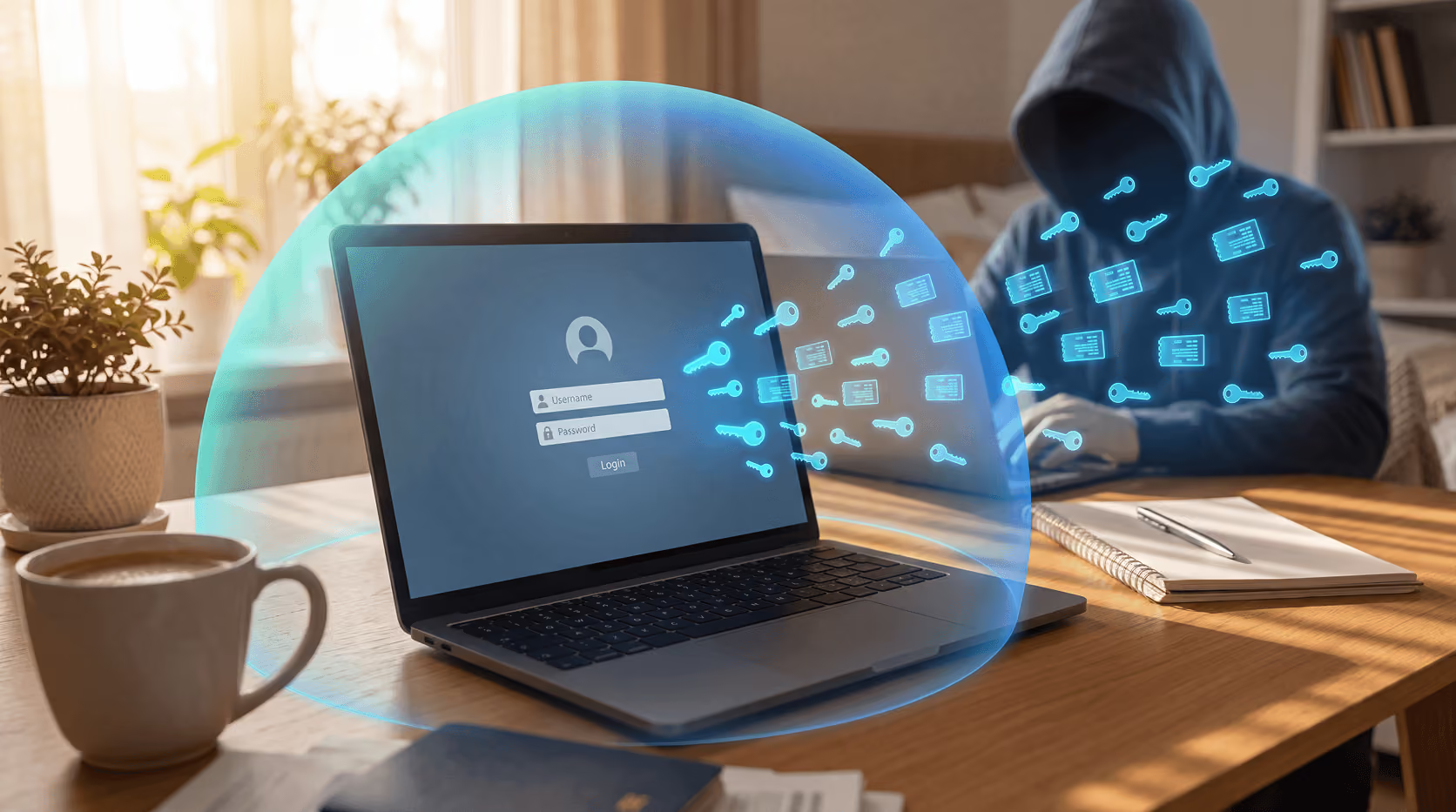
A lookalike page does not need to fool you forever. It only needs to look right for the 10 seconds it takes to type a password or card number.
Modern phishing pages are pixel-perfect copies. They use the same fonts, colors, logos, and layouts as the real sites. Some even pull live content from the real brand. The difference is invisible unless you check the URL.
The Psychology of Why We Skip Verification
- Task focus: You are trying to log in or buy something, not evaluate website legitimacy. Your brain is on the task, not security.
- Pattern matching: The page looks familiar, so your brain marks it as safe. Scammers exploit this by copying every visual detail.
- Urgency: "Your session is expiring" or "Complete purchase now" creates time pressure. You act before you verify.
- Trust transfer: You trusted the email or ad that brought you here, so you trust the landing page by extension.
Real Lookalike Examples (And Why People Fall for Them)
Watch out for this sneaky phishing scam imitating @X 👇 https://t.co/vuhiJccOpU
Guardio (@GuardioSecurity) June 3, 2024
Scammers impersonate trusted brands like X to trick users into entering credentials on fake pages
Example 1: The Malvertising Login
How it happens:
You search for your bank name. The top result is an ad. It looks official. You click, land on a login page that looks exactly right, and enter your credentials.
Why people fall for it:
- Search ads appear before organic results and look trustworthy
- The landing page is a perfect copy of the real login
- You were actively trying to log in, so entering credentials feels natural
- The URL might be "bankofamerica-login.com" - close enough to skip verification
Safe response: Never use ads to reach login pages. Type the URL yourself or use a bookmark.
Watch out for this sneaky phishing scam imitating @X 👇 https://t.co/vuhiJccOpU
Guardio (@GuardioSecurity) June 3, 2024
Real example: Scammers impersonating X to steal login credentials
Example 2: The Email Password Reset
How it happens:
You get an email: "Unusual activity detected. Reset your password." The button takes you to a page that looks exactly like the password reset flow.
Why people fall for it:
- You receive legitimate password reset emails from this brand
- The urgency ("unusual activity") creates fear
- The page looks identical to previous password resets you have done
- You want to protect your account, so you act quickly
Safe response: Do not use the email link. Go to the site directly and check for security alerts in your account settings.
Example 3: The Checkout Page Redirect
How it happens:
You are buying something on a small online store. At checkout, you are redirected to a payment page that looks like a standard payment processor.
Why people fall for it:
- Payment redirects are normal - most stores use external processors
- The payment page looks professional
- You already decided to buy, so entering card details feels like the next step
- The URL seems payment-related ("secure-checkout-pay.com")
Safe response: Before entering card details, verify the domain belongs to a known payment processor (Stripe, PayPal, Square) or the store itself.
The Domain Verification Flow
StepWhat to CheckRed Flag1. Read the domainThe word immediately before .com/.net/.orgUnfamiliar or misspelled brand name2. Check your arrival pathDid you type it, use a bookmark, or click a link?Arrived via email, text, or ad link3. Look for pressureIs the page rushing you to act?"Expires in 5 minutes" or "Act now"4. Test password managerDoes your saved login autofill?Autofill does not recognize the site5. Try the homepageCan you navigate to login from the main site?Login page has no navigation to homepage
What to Do If You Already Entered Credentials
Step 1: Change the Password Immediately
- Go to the real site by typing the URL yourself
- Log in and change your password to something completely new
- If you cannot log in, the attacker may have already changed it - use account recovery
Step 2: Enable Two-Factor Authentication
- Even if your password is stolen, 2FA blocks the login
- Use an authenticator app (Google Authenticator, Authy) rather than SMS when possible
- Save backup codes in a secure location
Step 3: Check for Damage
- Review recent account activity for logins you do not recognize
- Check for changes to email, phone, or recovery options
- Look for forwarding rules (email) or linked accounts you did not add
- For financial accounts, review recent transactions
Step 4: If You Entered Payment Details
- Contact your card issuer immediately
- Request a new card number
- Monitor transactions for unauthorized charges
- Consider a fraud alert on your credit reports
{{component-tips}}
How Guardio Catches Lookalikes Before You Type
By the time you are looking at a login page, it is already designed to look perfect. The visual checks that worked in 2015 do not work against modern phishing. That is where Guardio helps.
- Domain age and reputation: Guardio checks when a domain was registered and its reputation signals. A "Chase login page" on a domain created yesterday is flagged immediately.
- Lookalike pattern detection: Domains like "paypa1.com" or "arnazon-login.net" use character substitution to fool quick glances. Guardio recognizes these impersonation patterns.
- Behavioral analysis: Guardio analyzes page behavior, not just appearance. Credential harvesting pages behave differently from legitimate logins.
- Real-time protection: Blocking happens before the page fully loads, before you have a chance to enter anything.
{{component-cta-custom}}
Report Phishing Sites
Sources
FAQs
How do I know if a login page is real?
Open the site directly, confirm the exact domain, and navigate to login from inside the site. Avoid logging in from message links.
Are ads in search results always safe?
No. Scam sites can use ads too. The safest move is to type the URL yourself or use a trusted bookmark.
Do password managers help with lookalike sites?
Yes. Password managers often will not autofill on the wrong domain, which can be a helpful warning signal.
What should I do if I entered my password on a suspicious page?
Change your password right away, enable two-step verification, and review recent account activity.
Should I call a support number from a pop-up?
No. Use the official help center or a known phone number from the company site.
Can Guardio help block phishing pages?
Guardio can help warn you about suspicious links and lookalike pages before you interact with them.