

Got a Verification Code Text You Did Not Request? What It Means


Key Takeaways
- Unexpected codes mean login attempts: Someone is trying your username and password right now.
- Never share verification codes: No legitimate support agent needs your code. Ever.
- The code is the last barrier: Your password is already compromised if codes are being sent.
- Act in minutes, not hours: The attacker is waiting for the code. Move faster than they do.
- Lock down adjacent accounts: If one password leaked, others using the same password are at risk too.
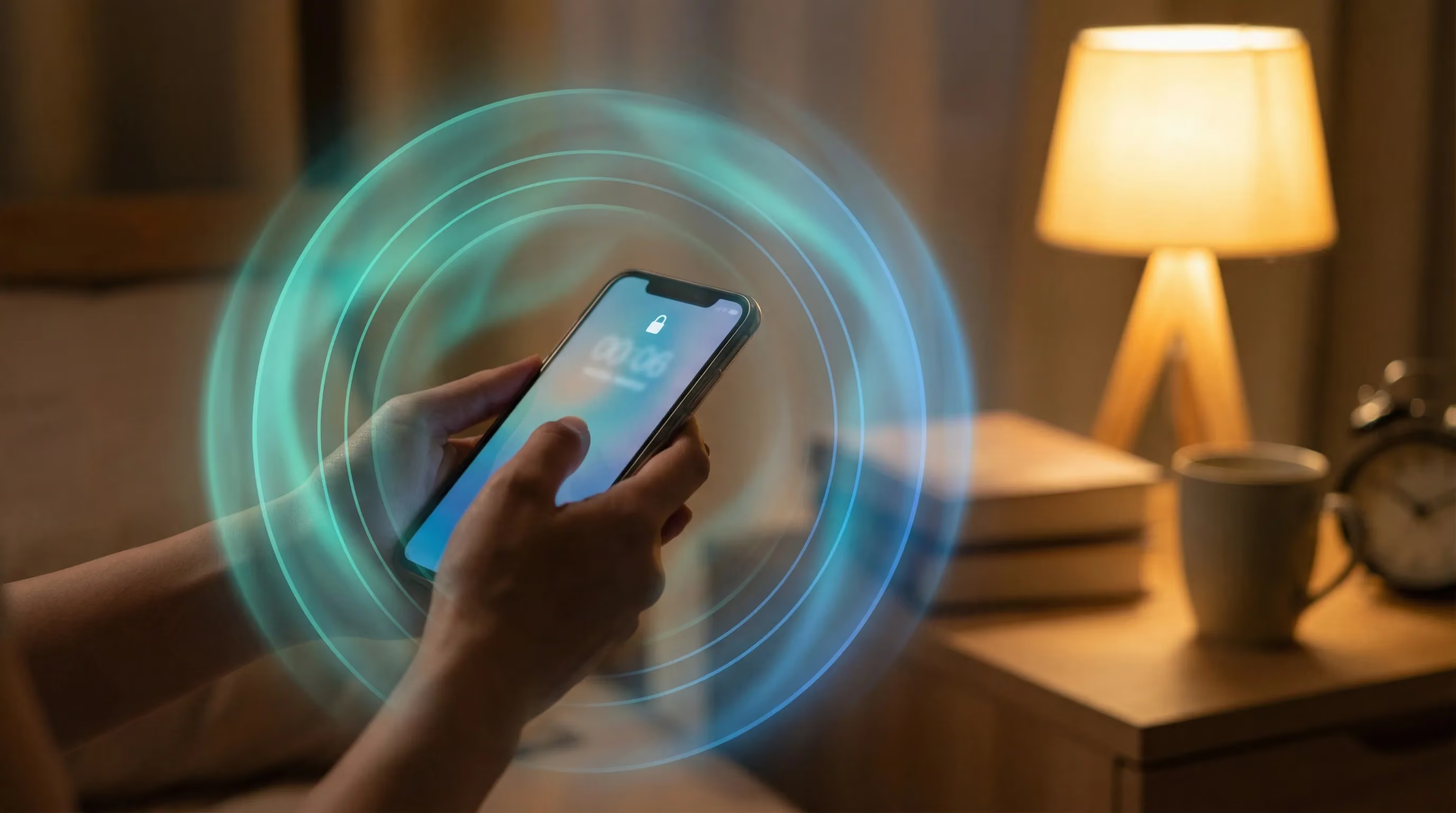
If you get a verification code you did not request, assume someone is trying to sign in. Do not share the code. Change the password on the real site and enable two-step verification immediately.
{{component-cta-custom}}
Why Unexpected Verification Codes Are a Serious Signal
A verification code is designed to be the last step of authentication. If you did not initiate that login, someone else did - and they already have your password.
This is not hypothetical. They have your username and password. They entered them. The system sent you a code because the login would otherwise succeed. You are the only thing between them and your account.
How Your Password Got Compromised
- Data breaches: Billions of username/password combinations are available from past breaches. If you reuse passwords, yours may be among them.
- Phishing: You may have entered your password on a fake site without realizing it.
- Credential stuffing: Attackers automatically try leaked passwords across many sites.
- Malware: Keyloggers or info-stealers may have captured your credentials.
Real Verification Code Scam Scenarios
Scenario 1: The Immediate Follow-Up Call
What happens:
You receive a verification code. Within minutes, your phone rings. "This is Google security. We detected a suspicious login attempt. To verify it was not you, please read me the code we just sent."
Why people fall for it:
- The timing is perfect - you just got the code
- The caller sounds professional and knowledgeable
- "Google security" sounds legitimate
- You want to protect your account, so you cooperate
- Reading a code seems like verification, not access
Reality: The caller is the attacker. They entered your password, triggered the code, and are now socially engineering you to complete the login for them.
Safe response: Hang up immediately. No legitimate company will ever call you and ask for a verification code.
Scenario 2: The Text Message Request
What happens:
You receive a code, then a text: "PayPal: We sent you a code to verify your identity. Reply with the code to confirm your account is secure."
Why people fall for it:
- The message appears to come from PayPal
- It references the code you just received
- "Confirm your account is secure" sounds protective
- Replying to a text seems harmless
Reality: PayPal will never ask you to text them a verification code. This is the attacker trying to capture the code.
Safe response: Do not reply. Go directly to PayPal.com and secure your account.
Scenario 3: The "Wrong Number" Setup
What happens:
You get a text: "Hi! I accidentally entered your number for my Uber account. Can you send me the code you just received? So sorry for the trouble!"
Why people fall for it:
- It sounds like an innocent mistake
- The person seems polite and apologetic
- You want to be helpful
- A verification code for "their" account seems harmless to share
Reality: The code is for your account, not theirs. They are using social engineering to bypass your 2FA.
Safe response: Do not respond. If you did not request a code, it is not a wrong number situation.
What Verification Code Theft Enables
| Account Type | What Attackers Can Do | Immediate Risk |
|---|---|---|
| Email (Gmail, Outlook) | Read emails, reset passwords for other accounts, access sensitive documents | Email is the master key - it enables resets everywhere |
| Banking / Financial | View balances, transfer money, add payees, change settings | Direct financial theft |
| Social Media | Impersonate you, scam your contacts, access private messages | Reputation damage, relationship exploitation |
| Shopping (Amazon, etc.) | Make purchases, access saved payment methods, change shipping | Financial theft, intercepted deliveries |
| Cloud Storage | Access all stored files, photos, documents | Data theft, potential blackmail |
What to Do Right Now
Immediate Actions (Do These in Order)
- Do not share the code - Not with anyone, for any reason
- Go to the real site - Type the URL yourself, do not use links
- Change your password - Use something completely new and unique
- Enable authenticator app 2FA - More secure than SMS codes
- Sign out all sessions - Kick out anyone who might have gotten in
- Check for account changes - Look for forwarding rules, linked accounts, recovery changes
If Codes Keep Coming
Repeated codes usually mean repeated attempts with your password. Your credentials are compromised and being actively used.
- Change to a unique password you have never used anywhere
- Check haveibeenpwned.com to see if your email appears in known breaches
- Consider changing passwords on other accounts that used the same or similar passwords
{{component-tips}}
How Guardio Helps Protect Your Accounts
By the time you receive an unexpected verification code, your password is already compromised. Guardio helps at earlier stages:
- Data breach monitoring: Guardio scans for your email and credentials in known data breaches and alerts you when exposure is detected.
- Phishing page blocking: Many password compromises happen through phishing. Guardio blocks fake login pages before you can enter credentials.
- Credential leak detection: When your information appears in new breaches, Guardio notifies you so you can change passwords before attackers use them.
{{component-cta-custom}}
Sources
FAQs
Can someone hack me with a verification code?
The code is usually a sign-in step. If you share it, it can help someone sign in as you. Do not share it.
Why am I getting codes if I did not try to log in?
Someone may be trying to sign in using your phone number or email. Secure the account through the official app or site.
Should I reply to the text and ask who sent it?
No. Do not engage. Go to the service directly and secure the account.
What is the first thing I should do?
Change the password and enable two-step verification on the affected service, then review active sessions.
What if the code is for a service I do not use?
Ignore it, but stay alert for follow-up messages that try to get you to click or call.
How can Guardio help?
Guardio can help warn you about suspicious links and lookalike sign-in pages before you enter credentials.
 Phishing Scams
How Facebook Job Scam Turns Your Job Hunt Upside Down
 Phishing Scams
Scams on Telegram: Uncovering Telegram's Phishing Market


